Negative mana
Cinnamon BunNegative mana is a harmful magical condition that turns damaged places into hostile environments and links dungeon destruction, corrupted vegetation, abnormal creatures, and political displacement. It is first understood through reports of the destruction of Dunwich Dungeon, where the breaking of ley lines caused mana to shift and turn, while the danger of nearby Imperials complicated the question of whether civilians could evacuate safely. The concept therefore operates at once as an environmental disturbance and as a force that reorganizes human movement, settlement, and authority.
Definition and Magical Ecology
Negative mana is described as a form of mana associated with rot and corruption rather than as a simple lack of magical energy. Dylan explains that the area around the destroyed Dunwich Dungeon has been made unwelcoming by negative mana, while the Two-Lipped Tulip is identified as a plant that actively seeks locations containing rot-aspect mana or negative mana. The distinction matters because the plant does not merely survive in damaged ground: it grows quickly there, behaves like a weed, and can slowly purify the surrounding mana. Negative mana thus has an ecological presence, creating conditions to which certain organisms are adapted and against which ordinary travelers and herbalists must be cautious.
The Two-Lipped Tulip also makes the danger materially legible. Its flower can whip around and bite animals or unwary herbalists, injecting a weak to mild venom that drains health over time. Its paired venom sacks contain a useful contact poison and ingredients for strengthening and drain-based potions. The plant therefore embodies the ambivalence of negative mana: corruption produces hazards, but it also generates resources that can be harvested, traded, and incorporated into practical magic. Dylan offers Broccoli Bunch a quest connected to finding the plant, turning a damaged landscape into both a threat and an economic opportunity.
Effects on Places and Travel
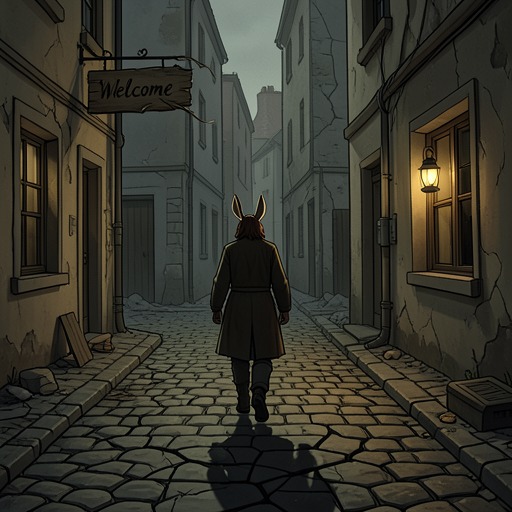
The destroyed Dunwich Dungeon provides the clearest physical image of negative mana’s effects. Its entrance is a deep, dark opening shaped like a mining shaft, framed by wooden beams scorched black as though something had exploded outward. The surrounding ground is blackened by fire, and the remaining vegetation is skeletal and dead. The site is not simply an abandoned dungeon; it is a landscape whose visible ruin records a magical rupture and whose continuing condition prevents it from returning easily to ordinary life.
Broccoli Bunch experiences the same disturbance through the body. As the climb toward the Dunwich site continues, the air feels wrong rather than merely stale, and Broccoli connects that sensation to Dylan’s warning about strong negative mana. The uncertainty over whether negative mana is an actual substance or an absence of mana remains part of the character’s early understanding, but the bodily evidence makes the phenomenon difficult to dismiss. Mana recovery also appears unusually slow in the area, taking far longer than expected to return even a single point. For people accustomed to predictable magical reserves, this alteration would be frightening: the environment interferes not only with comfort and scenery but with the dependable operation of a person’s powers.
The wider journey places this disturbance within a changing geography. Rain-filled roads, muddy ditches, thinning forests, marshland, and swarms of insects mark the route toward the southern swamp dungeon region. Negative mana is not presented as an isolated visual effect restricted to a single ruin; it belongs to a broader landscape in which travel becomes slower, magical conditions become uncertain, and settlements must rely on knowledge, equipment, and organized expeditions to move through dangerous terrain.
Organisms, Dungeons, and Contamination
Negative mana is closely tied to dungeon instability. A report states that Dunwich Dungeon was destroyed and that the resulting shifts in mana were the snapping apart of ley lines. Later, Broccoli discovers the Dungeon Core for the Wonderland Dungeon alongside an Evil Root and receives a new quest declaring that evil roots remain and that dungeons across Dirt are infected. This connection expands negative mana from a local remnant of the Dunwich disaster into a wider condition capable of affecting dungeon systems across the world.
The concept also clarifies why creatures formed from ambient magical concentrations are treated as nuisances rather than as ordinary animals. The marsh slimes encountered by the expedition are made from concentrations of ambient mana and arise from a particular kind of mana; they roll toward magical objects and people, adhering to whatever magic they find. The evidence does not state that every slime is produced by negative mana, but it places them within the same ecological logic: magical conditions generate bodies, behaviors, and risks that reshape how travelers interpret the landscape. Negative mana belongs to a world where environmental contamination is not passive. It can cultivate plants, alter creatures, destabilize dungeons, and make the boundaries between place and monster difficult to maintain.
Human Responses and Narrative Significance
Human communities respond to negative mana through trade, reconnaissance, evacuation, and cleansing. Dylan knows the history of the destroyed Dunwich Dungeon and recognizes the area as dangerous enough to require caution while still being accessible to a determined adventurer. His request converts regional knowledge into a quest, while the Two-Lipped Tulip turns the damaged site into a source of information and useful materials. The earlier report from Overseer Hardy shows the larger political stakes: the mayor does not want to evacuate, but the destruction of the dungeon, the snapping ley lines, and the proximity of Imperials make remaining impossible. Negative mana therefore participates in decisions that affect civilians, military pressure, and the survival of settlements.
The world’s response is also encoded through the quest system. After Broccoli encounters the Dungeon Core and the Evil Root, a new quest appears: “Pruning the Evil,” with the warning that evil roots remain and that dungeons across Dirt are infected and must be destroyed. The system gives environmental corruption a moral vocabulary and an actionable form. Negative mana is not only something to observe or endure; it becomes a condition that demands intervention, even when the exact nature of the contamination is still being learned.
The concept’s decisive significance lies in this overlap of ecology, magic, and social organization. It explains why a ruined dungeon can remain dangerous after its destruction, why plants can both poison and purify, why magical recovery becomes unreliable, and why routes, evacuations, and adventuring work are reorganized around contaminated sites. Negative mana makes damage cumulative rather than momentary: the explosion or collapse may be the visible event, but the dead vegetation, altered air, slow recovery, dangerous flora, and continuing dungeon infection are the longer life of the disaster. In that sense, it is the book’s clearest mechanism for showing that magical pollution is a condition of place, not merely an enemy waiting to be defeated.